Was ist Delta im Order Flow?
Delta ist aggressives Kaufvolumen minus aggressives Verkaufsvolumen. Es verdichtet die Bid-/Ask-Aufteilung eines Balkens oder eines Preisniveaus zu einer einzigen vorzeichenbehafteten Zahl – positiv, wenn Käufer die Aggressoren waren, negativ, wenn Verkäufer es waren.
Wie Delta funktioniert
Jeder Trade hat einen Aggressor: die Seite, die den Spread überquerte. Summiere das Volumen aggressiver Käufe, ziehe das Volumen aggressiver Verkäufe ab, und das Ergebnis ist Delta. Ein Balken, der 1.000 an aggressivem Kaufen und 600 an aggressivem Verkaufen handelte, hat ein Delta von +400. Dieselbe Berechnung gilt auf einem einzelnen Preisniveau (Delta pro Niveau) oder über einen gesamten Balken hinweg (Balken-Delta).
Delta verleiht der Teilnahme eine Richtung. Rohes Volumen sagt dir, dass ein Balken aktiv war; Delta sagt dir, welche Seite das Heben übernahm – eine Information, die eine schlichte Volumenzahl nicht tragen kann.
Delta vs. Volumen
Delta und Volumen messen verwandte, aber unterschiedliche Dinge.
| Volumen | Delta | |
|---|---|---|
| Zählt | Alle gehandelten Kontrakte | Aggressive Käufe minus aggressive Verkäufe |
| Vorzeichen | Immer positiv | Positiv oder negativ |
| Beantwortet | Wie viel wurde gehandelt? | Welche Seite war aggressiv? |
| Grenzfall | Hohes Volumen, ausgeglichene Seiten | Delta nahe null trotz starkem Volumen |
Warum das Bid-/Ask-Volumen zählt
Delta existiert nur, weil Trades eine Bid-/Ask-Aufteilung tragen. Ohne zu wissen, welche Seite der Aggressor war, könntest du den Kaufdruck nicht vom Verkaufsdruck trennen – du hättest nur eine Volumensumme. Die Aufteilung ist es, die dem Delta seine Bedeutung gibt:
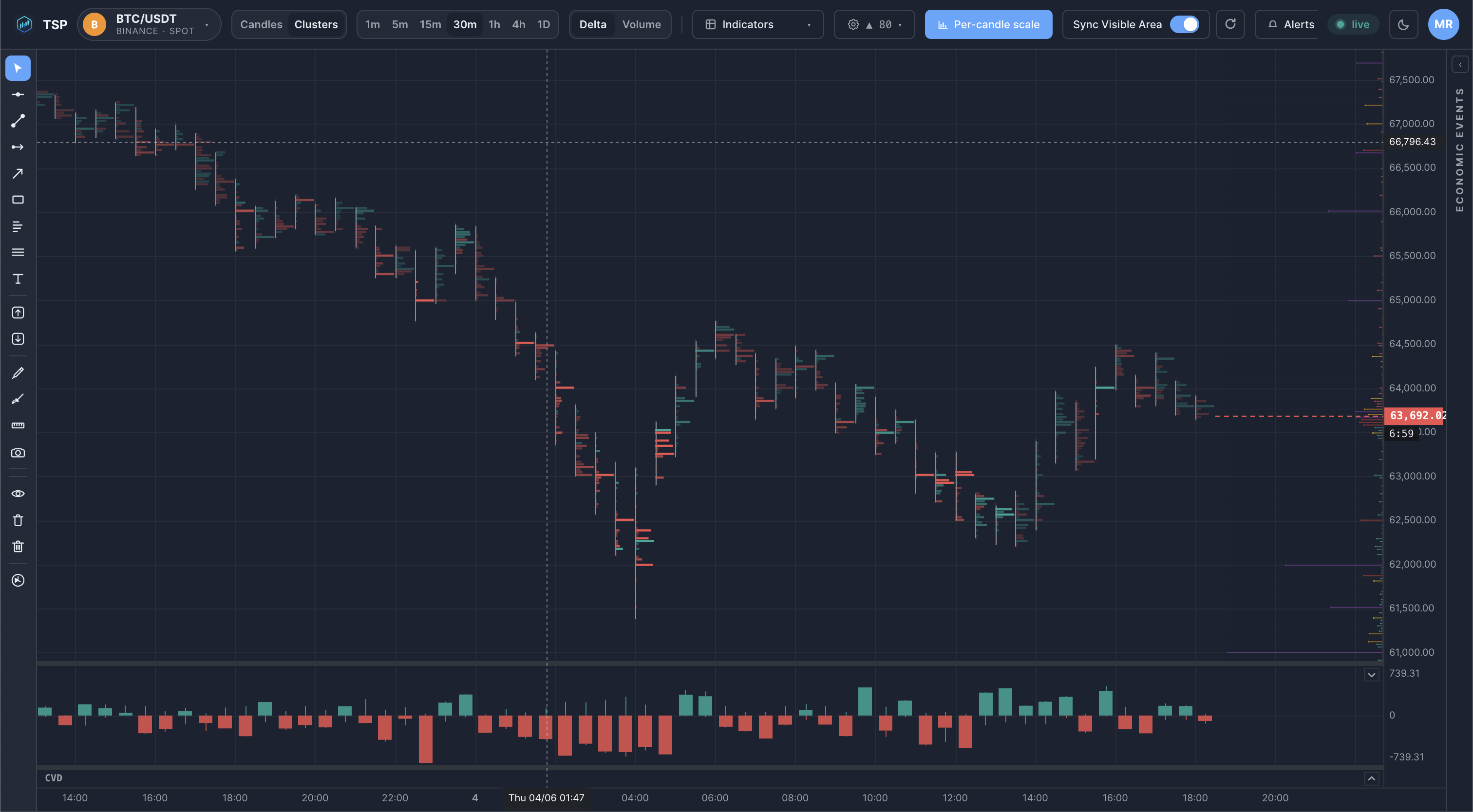
Das Lesen des Deltas gegen den Preis hilft dir zu erkennen:
- Agreement — price rising with positive delta describes buyers driving the move.
- Divergence — price rising while delta is flat or negative may reflect offers being lifted without follow-through, or sellers being absorbed.
- Absorption — a large delta that barely moves price, a descriptive sign the other side is absorbing it.
Dies sind beschreibende Lesungen abgeschlossener Aktivität, keine Prognosen darüber, was der Preis als Nächstes tun wird.
Beispiel im Chart
FAQ
Was ist Delta im Order Flow?
Delta ist aggressives Kaufvolumen minus aggressives Verkaufsvolumen. Es verdichtet die Bid-/Ask-Aufteilung eines Balkens oder Preisniveaus zu einer einzigen vorzeichenbehafteten Zahl: positiv, wenn Käufer die Aggressoren waren, negativ, wenn Verkäufer es waren.
Wie unterscheidet sich Delta von Volumen?
Volumen zählt alles, was gehandelt wurde; Delta zählt die Nettorichtung der Aggression. Ein Balken mit hohem Volumen kann ein Delta nahe null haben, wenn Kauf und Verkauf ausgeglichen waren, und ein ruhiger Balken kann ein großes Delta zeigen, wenn eine Seite dominierte.
Was ist kumulatives Delta?
Kumulatives Delta (CVD) ist eine laufende Summe des Deltas über die Zeit. Es addiert das Delta jedes Balkens zum vorherigen und zeichnet eine Linie, die zeigt, wie sich die Aggression über eine Session hinweg akkumuliert hat.
Sagt Delta den Preis vorher?
Nein. Delta beschreibt Aggression, die bereits geschah. Es ist analytischer Kontext, kein Signal oder keine Prognose – starkes Delta mit wenig Preisbewegung bedeutet zum Beispiel oft, dass die andere Seite es absorbiert.
Delta auf Live-Krypto-Daten lesen
Öffne das TSP-Core-Dashboard und beobachte, wie sich das Delta pro Balken und pro Niveau in Echtzeit aktualisiert.