Order Flow
Order Flow ist die Live-Abfolge ausgeführter Trades und Orderbuch-Änderungen – wer der Aggressor war, zu welchem Preis und in welcher Größe. Es ist das Rohmaterial, aus dem Footprint-, Cluster-, Delta- und Volumenansichten allesamt aufgebaut sind.
Was ist Order Flow?
Every price move is the result of orders meeting. A resting limit order sits in the book; a market order crosses the spread to fill against it. The party that crosses is the aggressor — an aggressive buyer lifts the offer, an aggressive seller hits the bid. Order flow is the running record of those executions, level by level, in the order they happened: the tape.
Da Krypto-Börsen jeden Trade und jede Orderbuch-Aktualisierung veröffentlichen, lässt sich der Order Flow getreu rekonstruieren statt schätzen – was ihn zu einer sauberen Grundlage für höherstufige Analytik macht.
Warum ist das wichtig?
Der Preis allein sagt dir das Ergebnis; der Order Flow sagt dir den Prozess. Ihn zu lesen fügt Kontext hinzu, den eine Kerze nicht bieten kann:
- Aggression — whether buyers or sellers were the ones crossing the spread to make price move.
- Participation — how much size actually changed hands behind a move, not just how far price travelled.
- Reaction — how resting liquidity responded when aggressive orders arrived.
Dies sind beschreibende Beobachtungen ausgeführter Aktivität – Kontext für eigenständige Analyse, keine Signale.
Wie Trader es nutzen
Order-Flow-Lesen erfolgt üblicherweise nahe der Echtzeit, wo die Abfolge der Prints noch Information trägt:
- Beobachten, wie das Tape schneller oder langsamer wird, während sich der Preis einem Niveau nähert.
- Erkennen, ob ein Schub nach oben von echtem aggressivem Kaufen oder schlicht davon getrieben wird, dass Verkäufer zurücktreten.
- Den Order Flow als Eingabeebene nutzen und dann zu Footprint- oder Delta-Ansichten hochschalten, um ihn zusammenzufassen.
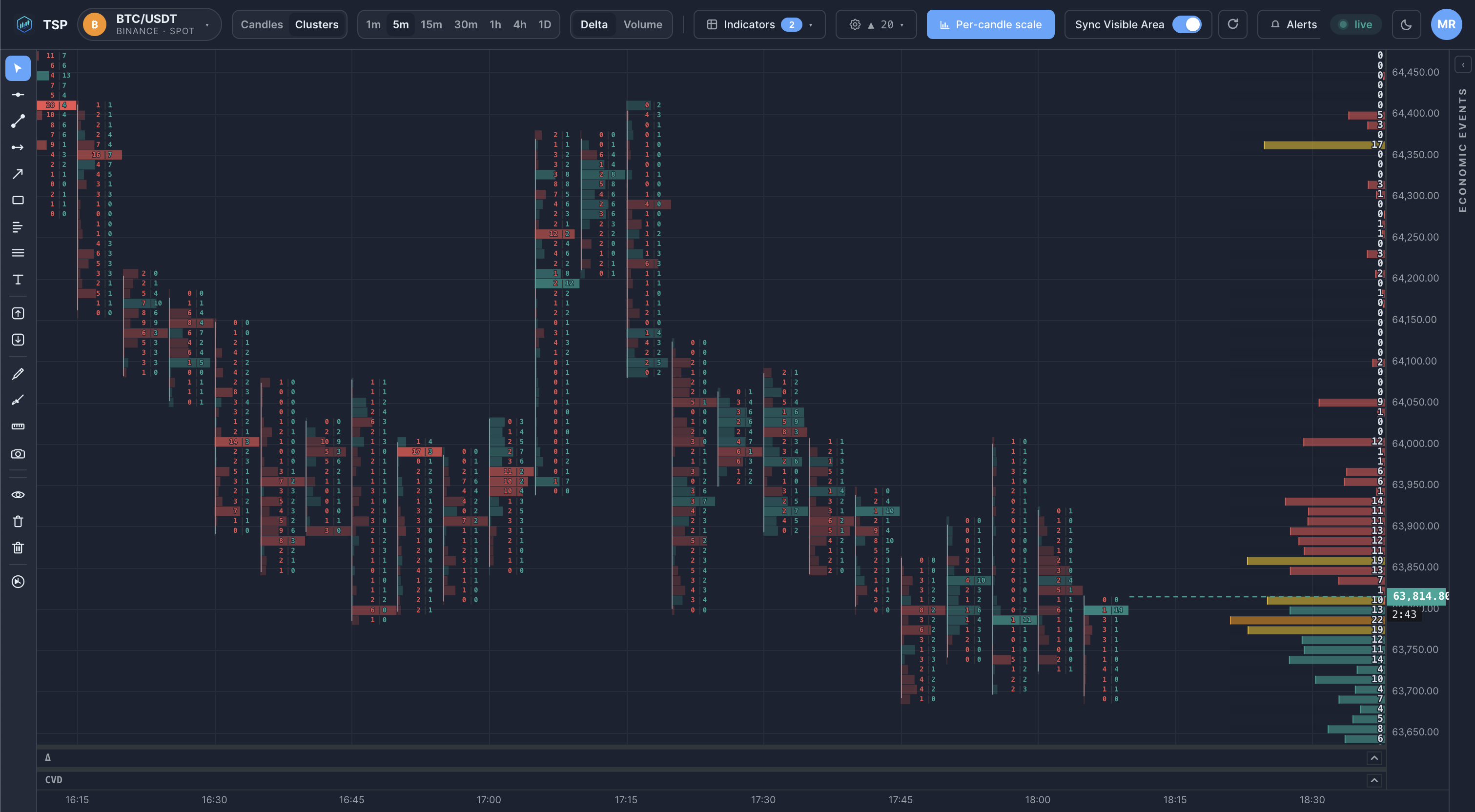
Beispiel im Chart
Häufige Fehler
- Over-reading a single print. One large trade is noise until it fits a pattern; order flow is read as a sequence, not a headline.
- Forgetting the two sides of liquidity. Price can rise on heavy buying or on thin offers — the tape distinguishes them, the candle doesn't.
- Watching the tape on too high a timeframe. Order-flow nuance lives in the lower timeframes; on a daily bar it is already summarised away.
- Treating flow as prediction. It describes what just traded, which informs analysis but does not forecast the next move.
So stellt TSP Core es dar
TSP Core streamt Live-Trades und Orderbuch-Aktualisierungen und verwandelt sie in verbundene Ansichten: den Preischart, die Footprint- und Cluster-Spalten, Delta und kumulatives Delta sowie die Markttiefe. Da sie alle auf demselben Echtzeit-Order-Flow beruhen, bleiben das Tape, die Balken und die abgeleitete Analytik konsistent zueinander, während sich der Markt bewegt.
Live-Order-Flow auf Krypto-Märkten ansehen
Öffne das TSP-Core-Dashboard und lies das Tape neben Footprint-, Delta- und DOM-Ansichten.