Qu'est-ce que le delta dans le flux d'ordres ?
Le delta est le volume d'achat agressif moins le volume de vente agressif. Il condense la répartition achat/vente d'une barre ou d'un niveau de prix en un seul nombre signé — positif quand les acheteurs étaient les agresseurs, négatif quand c'étaient les vendeurs.
Comment fonctionne le delta
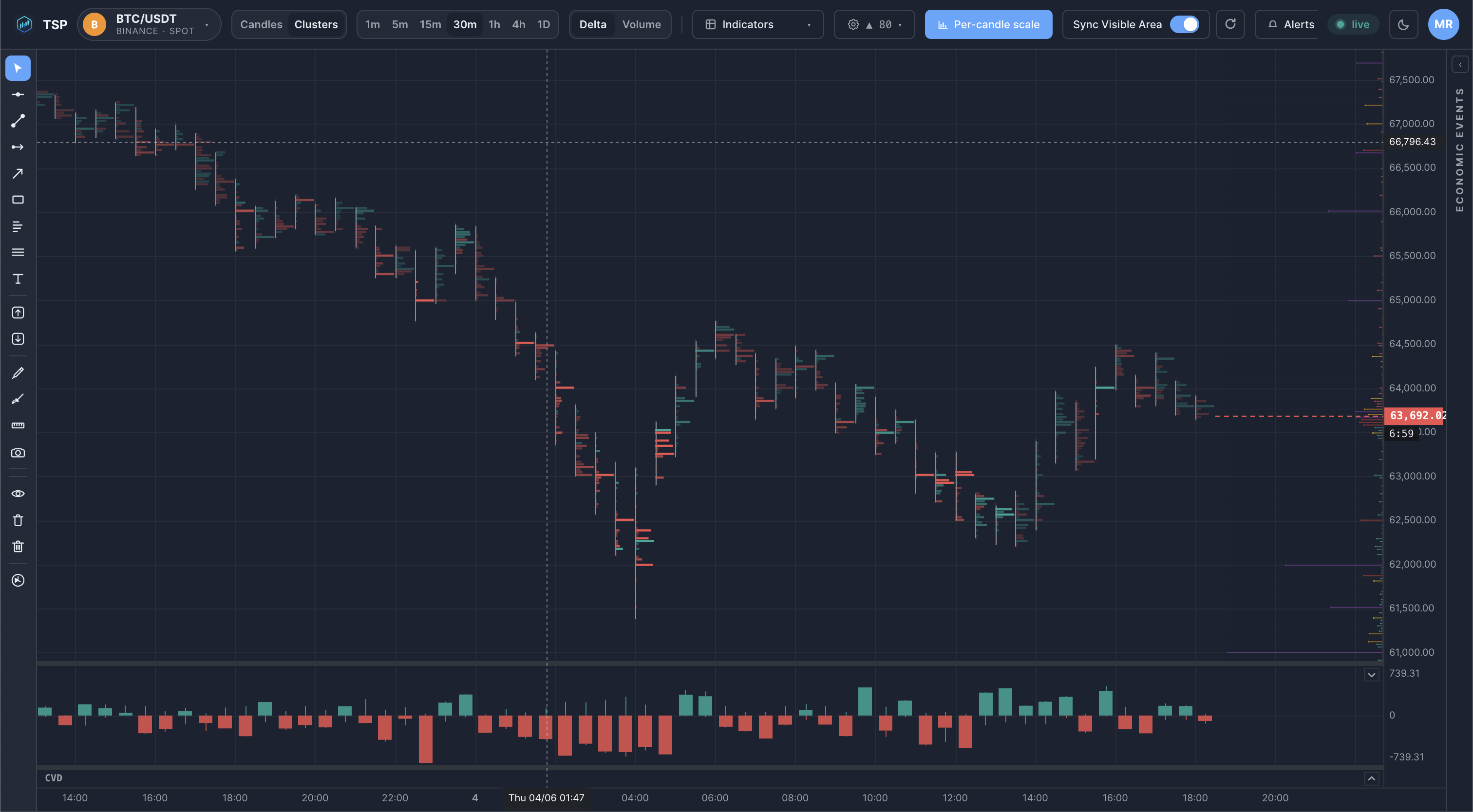
Chaque transaction a un agresseur : le camp qui a franchi le spread. Additionnez le volume des achats agressifs, soustrayez le volume des ventes agressives, et le résultat est le delta. Une barre ayant échangé 1 000 d'achat agressif et 600 de vente agressive a un delta de +400. Le même calcul s'applique à un seul niveau de prix (delta par niveau) ou à une barre entière (delta de barre).
Le delta donne une direction à la participation. Le volume brut vous dit qu'une barre était active ; le delta vous dit quel camp a fait le travail — une information qu'un simple chiffre de volume ne peut porter.
Delta vs volume
Le delta et le volume mesurent des choses liées mais distinctes.
| Volume | Delta | |
|---|---|---|
| Compte | Tous les contrats échangés | Les achats agressifs moins les ventes agressives |
| Signe | Toujours positif | Positif ou négatif |
| Répond à | Combien s'est échangé ? | Quel camp était agressif ? |
| Cas limite | Fort volume, camps équilibrés | Delta proche de zéro malgré un fort volume |
Pourquoi le volume d'achat/de vente compte
Le delta n'existe que parce que les transactions portent une répartition achat/vente. Sans savoir quel camp était l'agresseur, vous ne pourriez pas séparer la pression acheteuse de la pression vendeuse — vous n'auriez qu'un total de volume. La répartition est ce qui donne au delta son sens :
Lire le delta face au prix aide à repérer :
- Agreement — price rising with positive delta describes buyers driving the move.
- Divergence — price rising while delta is flat or negative may reflect offers being lifted without follow-through, or sellers being absorbed.
- Absorption — a large delta that barely moves price, a descriptive sign the other side is absorbing it.
Ce sont des lectures descriptives d'une activité achevée, non des prédictions sur ce que le prix fera ensuite.
Exemple sur un graphique
FAQ
Qu'est-ce que le delta dans le flux d'ordres ?
Le delta est le volume d'achat agressif moins le volume de vente agressif. Il condense la répartition achat/vente d'une barre ou d'un niveau de prix en un seul nombre signé : positif quand les acheteurs étaient les agresseurs, négatif quand c'étaient les vendeurs.
En quoi le delta diffère-t-il du volume ?
Le volume compte tout ce qui s'est échangé ; le delta compte la direction nette de l'agressivité. Une barre à fort volume peut avoir un delta proche de zéro si achats et ventes étaient équilibrés, et une barre calme peut montrer un delta important si un camp a dominé.
Qu'est-ce que le delta cumulé ?
Le delta cumulé (CVD) est un total courant du delta dans le temps. Il ajoute le delta de chaque barre au précédent, traçant une ligne qui montre comment l'agressivité s'est accumulée au fil d'une session.
Le delta prédit-il le prix ?
Non. Le delta décrit une agressivité déjà survenue. C'est un contexte analytique, non un signal ni une prévision — un delta fort avec peu de mouvement de prix, par exemple, signifie souvent que l'autre camp l'absorbe.
Lire le delta sur des données crypto en direct
Ouvrez le tableau de bord TSP Core et observez le delta par barre et par niveau se mettre à jour en temps réel.