Što je klaster grafikon?
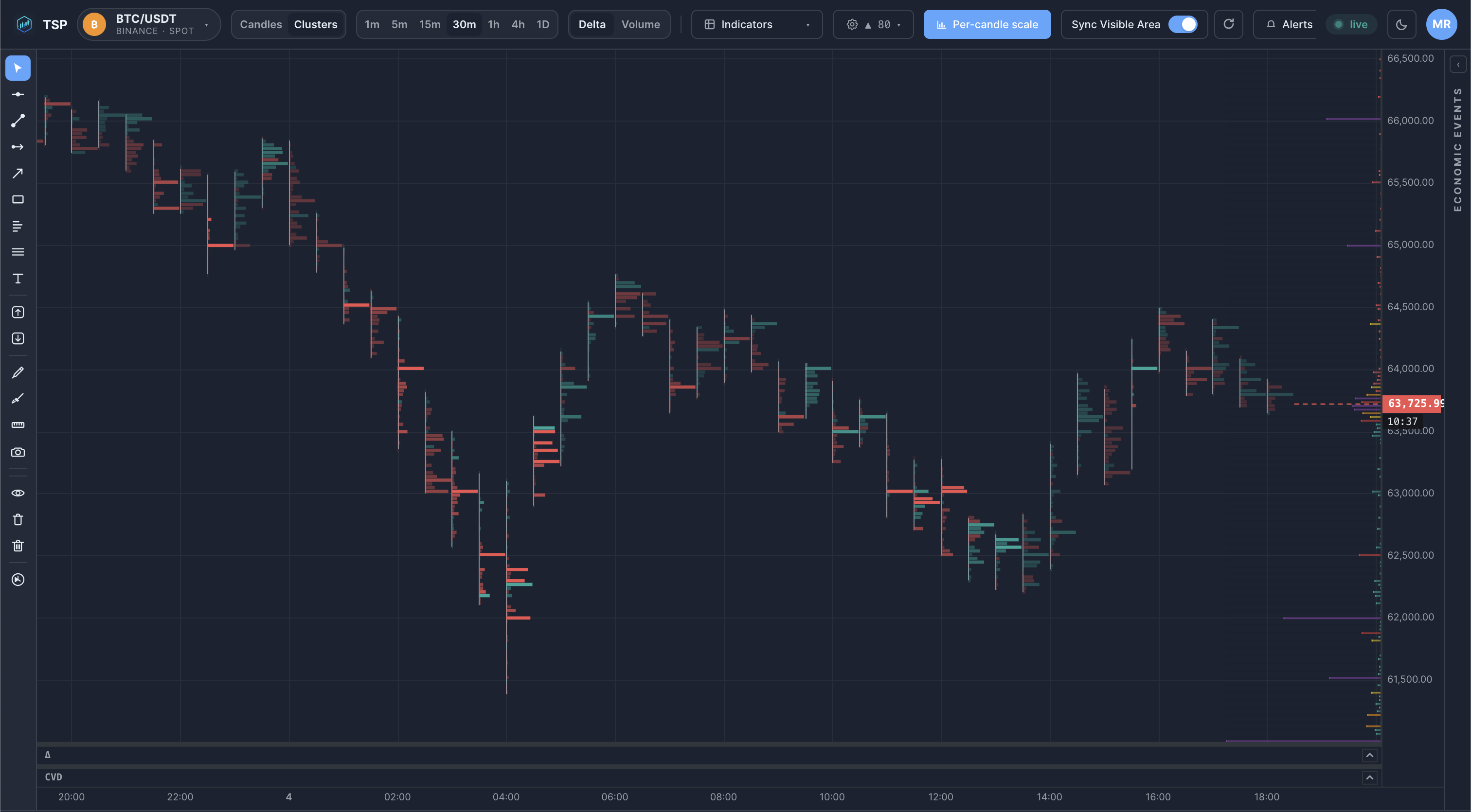
Klaster grafikon grupira volumen trgovan unutar svake trake u cjenovne pojaseve i prikazuje agresivnu bid/ask podjelu na svakom pojasu — footprint grafikon čije su razine agregirane u cjenovne klastere fiksne veličine radi čišćeg čitanja.
Kako klaster grafikoni rade
Svaka trgovina izvršava se na nekoj cijeni i na nekoj strani: agresivni kupac koji podiže ponudu ili agresivni prodavač koji udara po bidu. Klaster grafikon uzima te trgovine i raspoređuje ih u cjenovne pojaseve odabrane veličine — recimo širine 50 ili 150 dolara — zatim zbraja volumen kupnje i prodaje u svakom pojasu unutar svake trake. Traka postaje stog klastera, svaki označen time koliko se na njemu trgovalo i koja je strana bila agresor.
Because the band size is configurable, you control the resolution: tighter bands expose fine detail, wider bands smooth a busy bar into a handful of readable clusters. The band size is a price increment, not a timeframe — it does not change how much time the bar covers.
Klaster grafikon naspram footprint grafikona
Klaster grafikon i footprint grafikon prikazuju iste podatke order flowa; razlikuju se samo u tome koliko se fino cijena grupira.
| Footprint | Klaster | |
|---|---|---|
| Grupiranje cijene | Može prikazati svaku razinu cijene | Razine raspoređene u pojaseve fiksne veličine |
| Upravljano čime | Tickom instrumenta | Odabranom veličinom pojasa (cjenovni inkrement) |
| Najbolje se čita | Fini detalj razine po razini | Teške trake, raspodjela na prvi pogled |
| Isti podaci? | Da — bid/ask volumen po cijeni, samo na različitoj razlučivosti | |
Zašto je bid/ask volumen bitan
Grouping by price is only half the value; the bid/ask split is the other half. Knowing a band traded 1,200 contracts tells you it was busy; knowing 1,000 of them were aggressive buys tells you who was busy. That is the heart of order-flow reading:
Podjela kroz klastere pomaže vam uočiti:
- Absorption — heavy aggressive selling in a band that fails to push price lower.
- Imbalance — a band where one side's volume dwarfs the other's.
- Where business was done — the cluster that traded the most volume in the bar.
Ovo su opisna očitanja dovršene aktivnosti, a ne predviđanja onoga što će cijena učiniti sljedeće.
Primjer na grafikonu
Česta pitanja
Što je klaster grafikon?
Klaster grafikon grupira trgovani volumen u cjenovne pojaseve unutar svake trake i prikazuje bid/ask podjelu na svakom pojasu. To je footprint grafikon čije su razine agregirane u cjenovne klastere fiksne veličine umjesto svakog pojedinačnog ticka.
Po čemu se klaster grafikon razlikuje od footprint grafikona?
Prikazuju iste podatke order flowa; razlika je u granularnosti. Footprint grafikon može prikazati svaku razinu cijene, dok klaster grafikon agregira razine u cjenovne pojaseve odabrane veličine, čineći teške trake lakšima za čitanje na prvi pogled.
Je li veličina klaster pojasa vremenski okvir?
Ne. Klaster skala je cjenovni inkrement, a ne vremenski interval. Veća veličina pojasa grupira više cijena u svaki klaster; ne mijenja vremensko razdoblje koje traka pokriva.
Predviđaju li klaster grafikoni cijenu?
Ne. Klaster grafikon opisuje kako je volumen bio raspoređen po cijeni u trakama kojima se već trgovalo. To je analitički kontekst, a ne signal ni prognoza.
Čitajte klastere na živim kripto podacima
Otvorite TSP Core nadzornu ploču i grupirajte order flow u cjenovne pojaseve u stvarnom vremenu.