Order flow
Order flow je živi slijed izvršenih trgovina i promjena u knjizi naloga — tko je bio agresor, po kojoj cijeni i u kojoj veličini. To je sirovina iz koje su izgrađeni svi footprint, klaster, delta i volumenski prikazi.
Što je order flow?
Every price move is the result of orders meeting. A resting limit order sits in the book; a market order crosses the spread to fill against it. The party that crosses is the aggressor — an aggressive buyer lifts the offer, an aggressive seller hits the bid. Order flow is the running record of those executions, level by level, in the order they happened: the tape.
Budući da kripto burze objavljuju svaku trgovinu i ažuriranje knjige naloga, order flow se može vjerno rekonstruirati umjesto procjenjivati — što ga čini čistim temeljem za naprednu analitiku.
Zašto je to važno?
Cijena sama govori vam rezultat; order flow govori vam proces. Njegovo čitanje dodaje kontekst koji svijeća ne može:
- Aggression — whether buyers or sellers were the ones crossing the spread to make price move.
- Participation — how much size actually changed hands behind a move, not just how far price travelled.
- Reaction — how resting liquidity responded when aggressive orders arrived.
Ovo su opisna zapažanja izvršene aktivnosti — kontekst za samostalnu analizu, a ne signali.
Kako ga traderi koriste
Čitanje order flowa obično se obavlja blizu stvarnog vremena, gdje slijed zapisa još uvijek nosi informaciju:
- Praćenje ubrzava li se ili usporava traka kako se cijena približava razini.
- Uočavanje je li nalet prema gore vođen istinskom agresivnom kupnjom ili prodavači jednostavno odstupaju.
- Korištenje order flowa kao ulaznog sloja, a zatim prelazak na footprint ili delta prikaze radi njegova sažimanja.
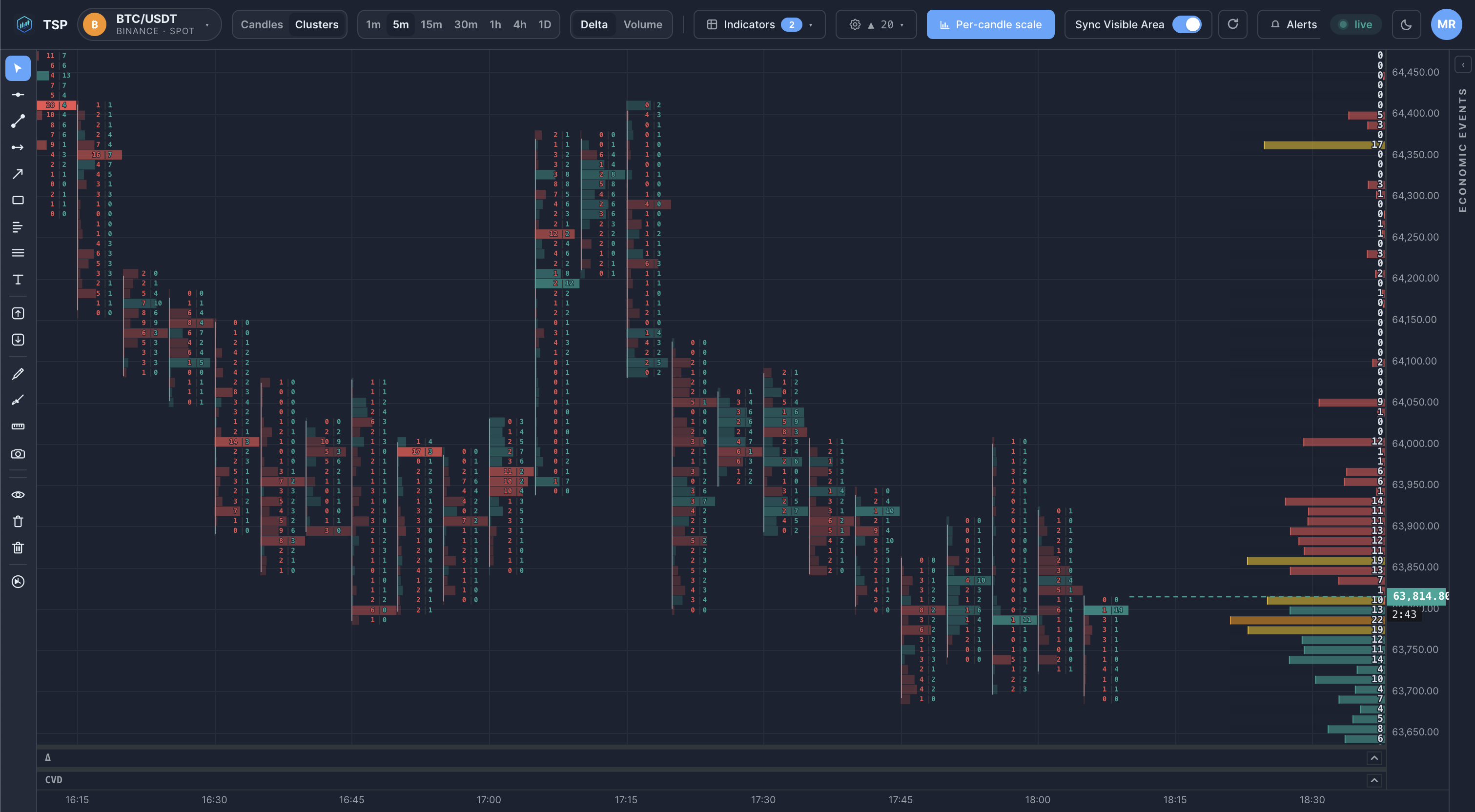
Primjer na grafikonu
Česte pogreške
- Over-reading a single print. One large trade is noise until it fits a pattern; order flow is read as a sequence, not a headline.
- Forgetting the two sides of liquidity. Price can rise on heavy buying or on thin offers — the tape distinguishes them, the candle doesn't.
- Watching the tape on too high a timeframe. Order-flow nuance lives in the lower timeframes; on a daily bar it is already summarised away.
- Treating flow as prediction. It describes what just traded, which informs analysis but does not forecast the next move.
Kako ga TSP Core prikazuje
TSP Core streama žive trgovine i ažuriranja knjige naloga te ih pretvara u povezane prikaze: cjenovni grafikon, footprint i klaster stupce, deltu i kumulativnu deltu te dubinu tržišta. Budući da svi crpe iz istog order flowa u stvarnom vremenu, traka, trake i izvedena analitika ostaju međusobno dosljedni kako se tržište kreće.
Pogledajte živi order flow na kripto tržištima
Otvorite TSP Core nadzornu ploču i čitajte traku uz footprint, delta i DOM prikaze.