Footprint-Charts
Ein Footprint-Chart zeigt das Kauf- und Verkaufsvolumen, das auf jedem einzelnen Preisniveau innerhalb einer Kerze gehandelt wurde – und verwandelt einen einzelnen Balken in eine detaillierte Karte des Order Flow statt nur vier OHLC-Werte.
Was ist ein Footprint-Chart?
A standard candlestick tells you only where price opened, closed, and how far it travelled. A footprint chart keeps that bar shape but fills it in: each price level inside the bar is annotated with how much volume traded there, split into aggressive buying (lifting the ask) and aggressive selling (hitting the bid). The result is a vertical column of numbers — or a colour-graded heatmap — that reveals where inside the bar the activity actually happened.
Da Krypto-Märkte fortlaufend handeln und jede Transaktion ausweisen, passen Footprint-Charts hervorragend: Das rohe Tape ist reichhaltig genug, um die Bid-/Ask-Aufteilung auf jedem Niveau ohne Schätzung zu rekonstruieren.
Warum ist das wichtig?
Zwei Balken können auf einem Kerzenchart identisch aussehen und doch völlig unterschiedliche Kämpfe beschreiben. Ein grüner Balken könnte stetige Akkumulation über alle Niveaus sein; ein anderer ein einzelner heftiger Sweep ohne Anschlussbewegung. Footprint-Charts machen diesen Unterschied sichtbar. Sie helfen dir zu sehen:
- Absorption — heavy selling that fails to push price lower, suggesting resting buyers are soaking it up.
- Imbalances — price levels where buy volume dwarfs sell volume (or vice versa) by a wide margin.
- Exhaustion — thinning volume at the extreme of a move, where the last aggressors run out.
Dies sind beschreibende Beobachtungen darüber, wie sich das Volumen verteilt hat – keine Handelssignale oder Prognosen.
Wie Trader es nutzen
Order-Flow-Trader lesen Footprint-Charts üblicherweise auf den niedrigeren Zeitebenen, auf denen einzelne Prints noch zählen – 1m bis 15m bei Krypto. Übliche Vorgehensweisen:
- Beobachten, wie der Point of Control (das meistgehandelte Niveau) innerhalb jedes Balkens nach oben oder unten wandert, während sich ein Trend entwickelt.
- Nach einer Häufung von Kauf-Imbalances suchen, die sich knapp über einem Unterstützungsniveau stapeln, bevor man entscheidet, ob das Niveau gehalten hat.
- Das Delta (netto Kauf minus Verkauf) aufeinanderfolgender Balken vergleichen, um abzuschätzen, ob die Aggression zu- oder abnimmt.
Beispiel im Chart
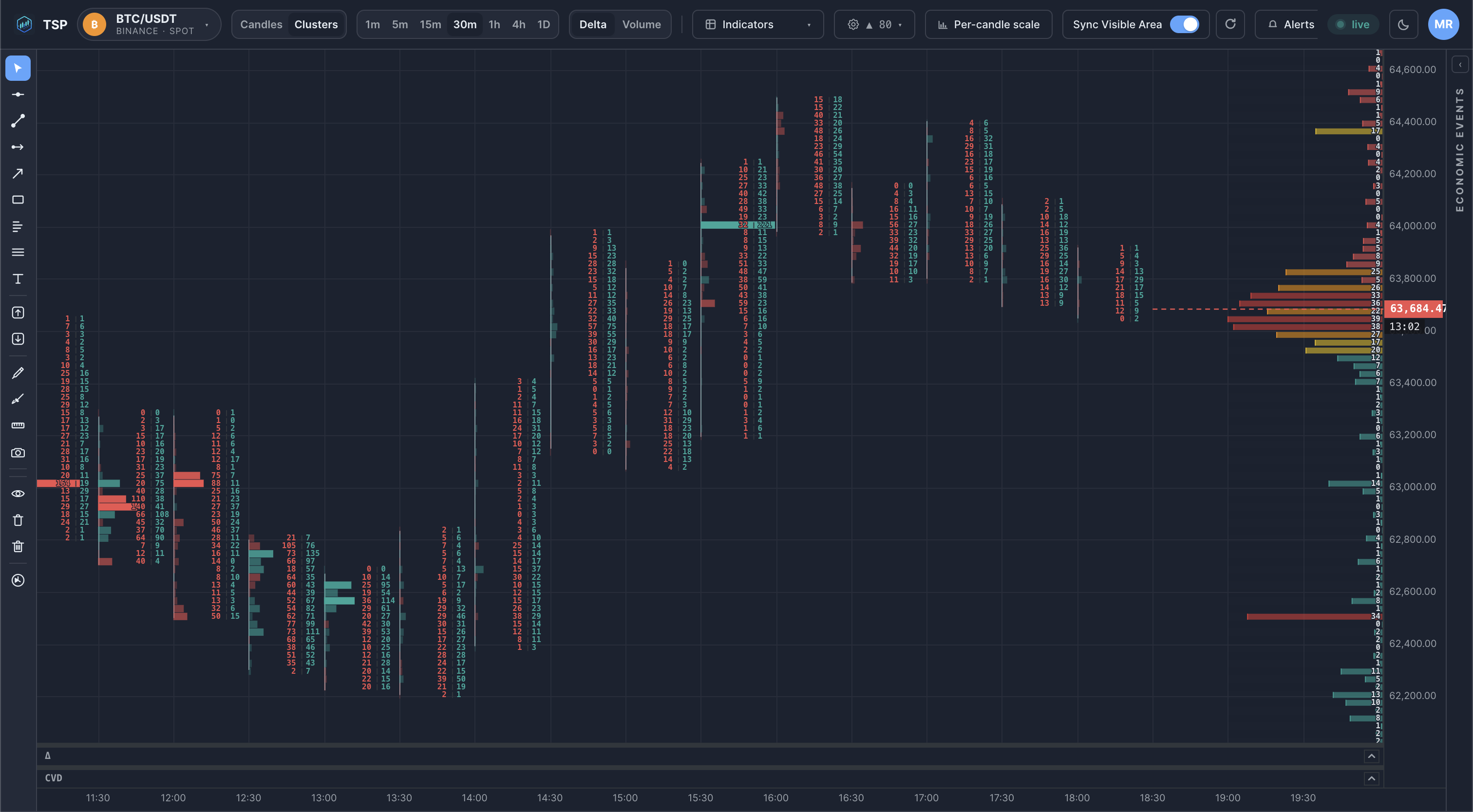
Häufige Fehler
- Reading footprints on too high a timeframe. On a 4h bar the level-by-level detail blurs together; footprints are most informative on the timeframes where single prints are still distinguishable.
- Treating an imbalance as a signal. A lopsided level describes what already traded — it is context, not a forecast.
- Ignoring the surrounding structure. Absorption at a random level means little; the same absorption at a tested support or a volume-profile node is far more meaningful.
- Confusing volume with delta. A high-volume level can still have near-zero delta if buying and selling were balanced.
So stellt TSP Core es dar
TSP Core stellt Footprints als Live-Cluster-Spalten direkt im Preischart dar und aktualisiert sie aus Echtzeit-Marktdaten, sobald jeder Trade printet. Jeder Balken wird in konfigurierbare Preisbänder unterteilt; innerhalb eines Bandes siehst du das gehandelte Volumen und die Kauf-/Verkauf-Aufteilung, wobei die aktivsten Niveaus hervorgehoben sind. Der live entstehende Balken aktualisiert sich Tick für Tick, und der abgeschlossene Balken ist auf dieselben Werte festgelegt, die in der Historie landen, sodass das, was du in Echtzeit beobachtest, dem entspricht, was du später durchgehst.
Footprint-Charts mit Live-Krypto-Daten ansehen
Öffne das TSP-Core-Dashboard und beobachte, wie sich das Bid-/Ask-Volumen in jedem Balken in Echtzeit aufbaut.