Анализ объёма
Анализ объёма — это изучение того, сколько торгуется и где. Он рассматривает торговое участие за движением цены и то, как эта активность распределена по цене и времени, — контекст, который одна лишь цена упускает.
Что такое анализ объёма?
Volume is simply the quantity that changed hands in a period or at a price. Volume analysis asks what that quantity tells you: was a move backed by broad participation or carried on thin activity? Did volume cluster at one price or spread across a range? It spans several lenses — volume per bar, volume by price (a profile), and volume split by aggressor side (delta) — but the common thread is using how much traded to add meaning to where price went.
Почему это важно?
Одинаково выглядящие движения могут опираться на совершенно разное участие. Анализ объёма выявляет это различие:
- Conviction vs. drift — a move on heavy volume reflects broad participation; the same move on light volume traded thinly.
- Where price spent effort — prices that traded large volume often become reference levels later.
- Change in tempo — rising or fading volume as price approaches a level is descriptive context about participation.
Это описательные наблюдения об активности, а не прогнозы или рекомендации.
Как трейдеры это используют
- Сравнение объёма бара пробоя с барами вокруг него для оценки участия.
- Использование профиля объёма для поиска цен, которые наторговали больше всего на выбранном диапазоне.
- Сочетание объёма с дельтой, чтобы отделить «здесь много наторговано» от «здесь агрессором была одна сторона».
Пример на графике
Частые ошибки
- Treating high volume as bullish or bearish on its own. Volume says how much traded, not which side won — read it with delta for direction of aggression.
- Comparing volume across different sessions blindly. Quiet hours and active hours have very different baselines; compare like with like.
- Ignoring where the volume sat. The same total volume means different things if it pooled at one price versus spreading across the range.
Как это визуализирует TSP Core
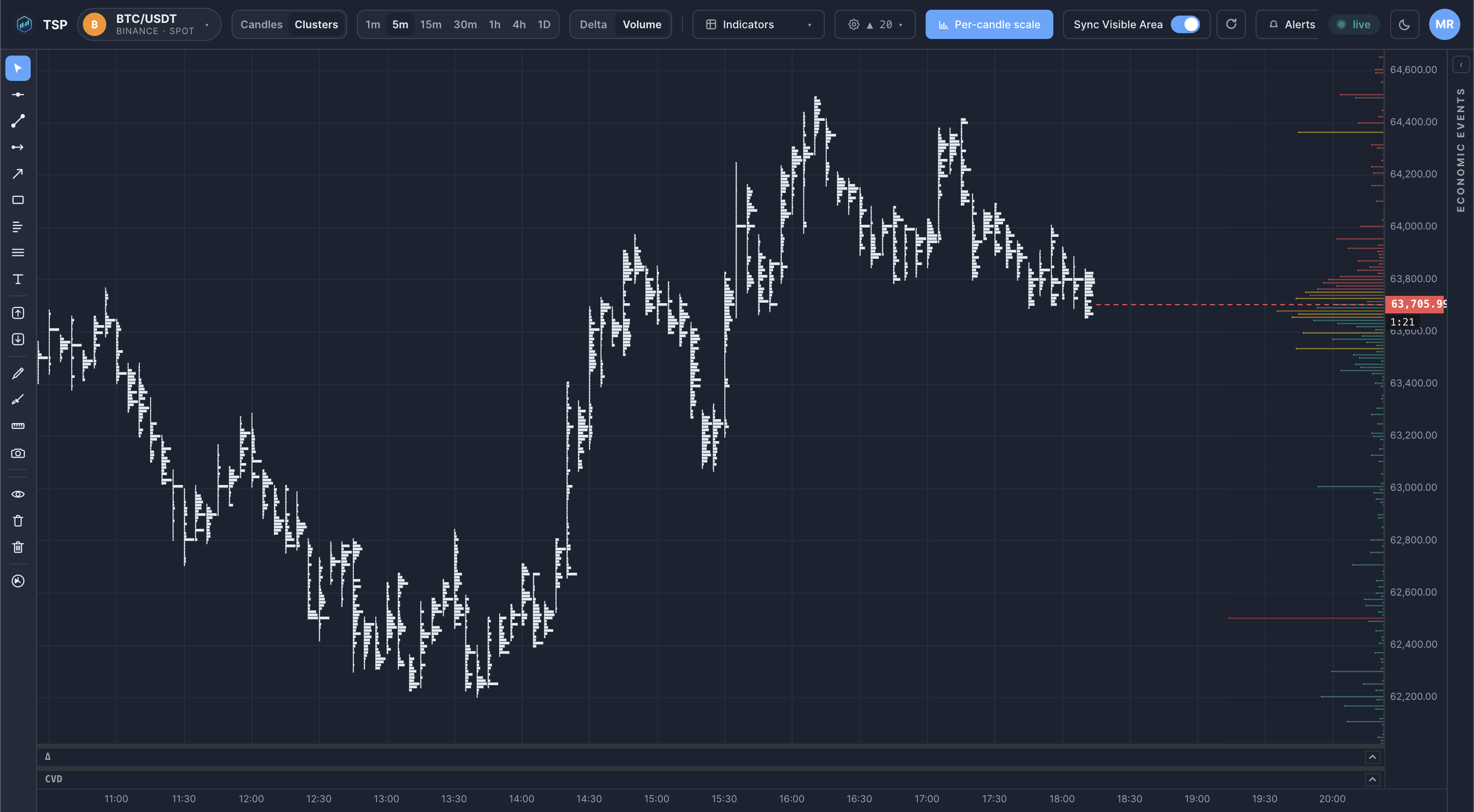
TSP Core представляет объём в нескольких связанных формах из одних и тех же живых данных: объём по барам под ценовым графиком, объём по цене в виде профиля и объём внутри каждого бара в виде столбцов футпринта и кластеров. Вы можете переходить между временны́м видом и ценовым видом одной и той же активности, с выделением наиболее активных областей, чтобы распределение легко читалось.
Посмотрите живой объём на крипторынках
Откройте дашборд TSP Core и читайте объём по времени и по цене в одном рабочем пространстве.